Power BI
Transforming ERP Data into Strategic Vendor Intelligence
These sample Power BI project demos are personally built by me and reflect real-world supply chain scenarios.
They show how I structure data, design KPIs, and create clear, interactive dashboards that turn complex information into practical, decision-ready insight.
Supplier Performance Scoreboard
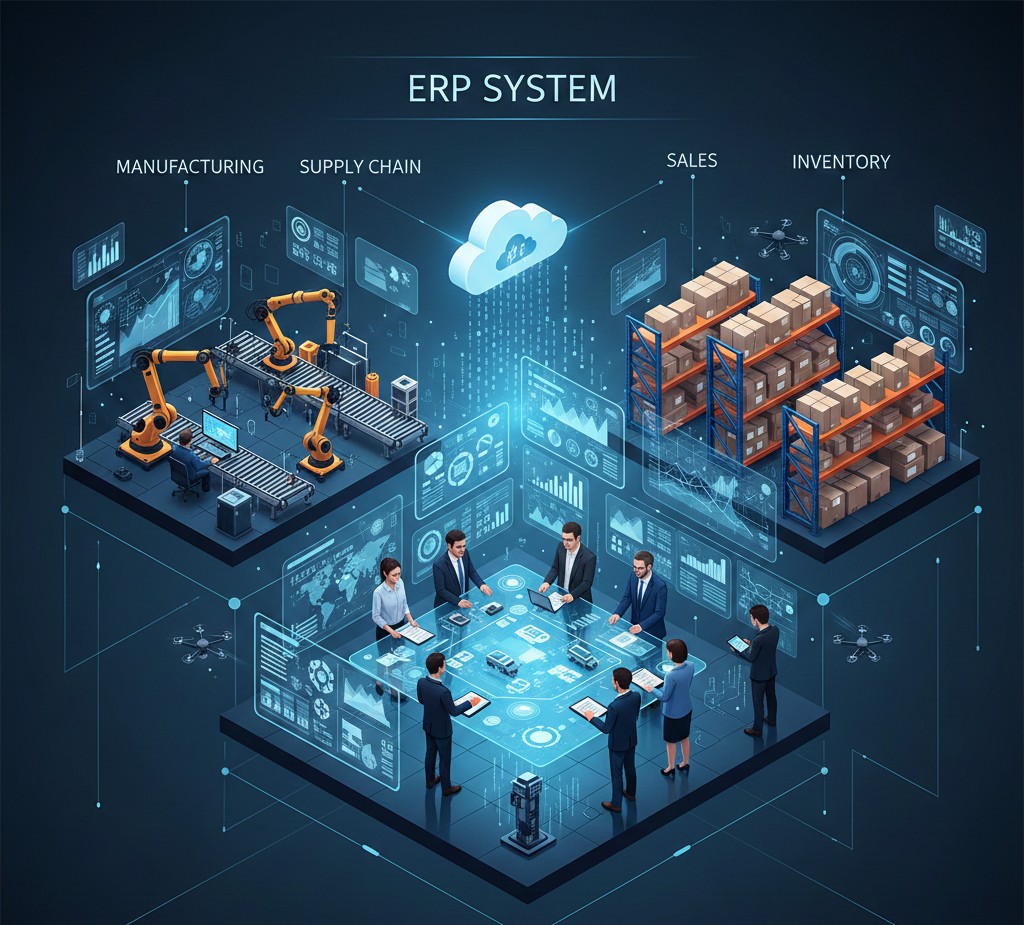
ERP systems capture detailed order fulfillment data — order dates, requested and actual delivery dates, unit costs, quantities ordered and received, and billed prices.
While this information is essential for operations, its true value is unlocked when it is structured, modeled, and analyzed with business intent.
In this project, I used Power BI to transform transactional ERP data into an integrated vendor performance dashboard. By combining order data with standard costs, contracted lead times, and overall spend, I built a data model designed to surface performance trends, pricing variability, and risk exposure.

The dashboard framework was built to answer high-value business questions:
- Are suppliers consistently meeting contracted lead times?
- Where are delivery variances creating operational risk?
- Have unit prices shifted beyond expected tolerances?
- Is spend consolidating or fragmenting across vendors?
- Are internal ordering patterns contributing to unnecessary rush activity?

This approach enables:
- Data-driven vendor performance reviews
- Stronger negotiation positioning through historical trend visibility
- Early identification of supplier risk
- Improved internal procurement discipline
- Executive-level visibility into spend and reliability trends
The result is not just reporting — it is a decision-support tool that drives accountability, strategic planning, and measurable operational improvement.
Tools & Capabilities Demonstrated
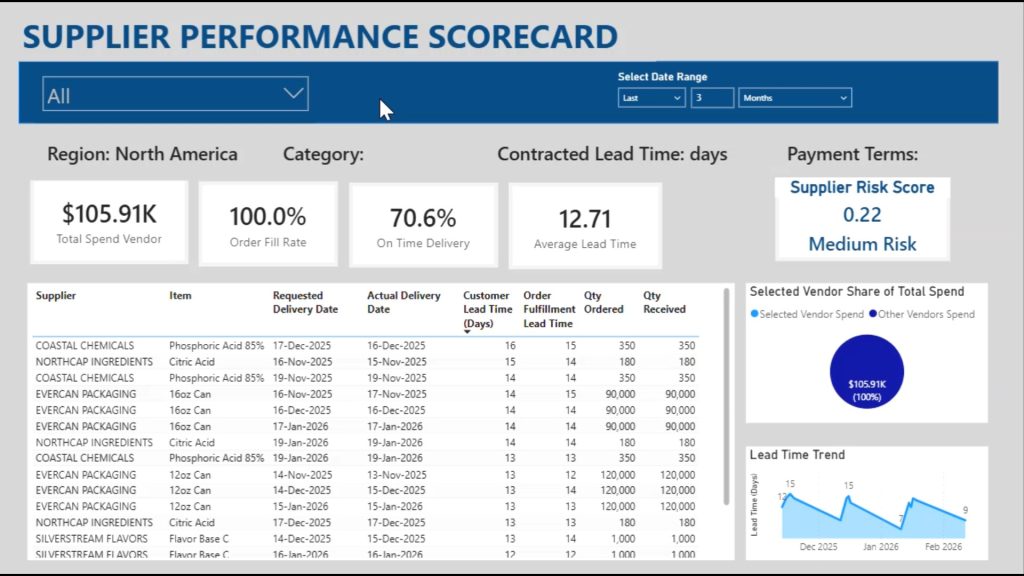
- Power BI – Interactive dashboard development and executive-ready reporting
- Power Query (M) – Data extraction, transformation, and cleansing from ERP exports
- Data Modeling – Relationship design, star schema structure, and performance optimization
- DAX – Custom measures for lead time variance, price change tracking, spend trends, and vendor scoring logic
- KPI & Metric Design – Translating contractual terms into measurable performance indicators
- Data Storytelling – Structuring visuals to guide decision-making, not just display data